


If you think Tequila and Corona Light are the drink of choice in Mexico, think again! We just returned from a week-long vacation in Cancun and we found ourselves pleasantly surprised with our introduction to Mexican wine.
We were completely unfamiliar with the Mexican wine scene because it isn’t available in any of our stores. But little did we know we would come home delighted with the wine we drank in Mexico. Our week proved to be educational, fun and—with Cinco de Mayo around the corner —timely for sharing our experience and adding Mexico as a category to this site!


We stayed at Secrets The Vine in Cancun, an adults only, all-inclusive property. Upon checking in, we had learned that Secrets has a complimentary wine tasting at 1 p.m. everyday so on our first full day at the resort, we opted for a cool reprieve from the hot Mexico sunshine and popped inside for the tasting.
We were the first to arrive and we met Martin Jiménez, the second in line of a team of 

In Mexico, Water Really Is Turned Into Wine


The second wine we tasted was a Merlot from Casa Madero. At this point, we learned that wine in Mexico has a long, storied history influenced by its Spanish heritage. Casa Madero is the oldest winery in North America, dating back to the late 1500s when the first Spanish conquistadors discovered an oasis with water springs and a profusion of wild vines, which is now the home of Casa Madero. It is located in the state of Coahuila, which is inland and in the northern part of Mexico, bordering Texas. The label of the wine is adorned with cursive writing, which replicates the land endowment that the King of Spain granted to Don Lorenzo Garcia, one of the first Spanish settlers in the region. The grant gave Garcia permission to turn the water and vines on this land into wine.
The Merlot didn’t overwhelm us, but it was pleasant and, given some time to breathe, it would have opened up more. Martin promised us a reserve selection from Casa Madero for the following day, luring us back in for another tasting. However, we were already sold. Our skepticism was dissipated by Martin’s passion and knowledge, the stories of the wine, and our growing curiosity to try more of what Mexico wine has to offer.
Did you Really Say 17?


With Argentina and Chile being such large exporters of wine to the U.S., I asked Martin why Mexico hasn’t joined the bandwagon, especially given its close proximity. He explained that the wine producers in Mexico are levied a total of 17 different taxes on their wine, which equates to an additional $6-7 placed on each bottle. It simply is too cost prohibitive and would not be competitive in our market. This explains our surprise when we initially looked at the wine menu at the resort and noticed the price of the Mexican wines. We had expected them to be lower than their Italian, French, and California counterparts, but in some cases they were even higher. So it all began to make sense.
No Mas Tequila, Por Favor
We opted to drink only wines from Mexico during our trip due to its rarity and novelty. Although the hotel maintains a cellar of approximately 4,500 bottles, all of which Martin conducts manual inventory of on a monthly basis, only a portion are from Mexico. Between the afternoon tastings as well as dinner, we tasted 13 Mexican wines during our short stay. Martin visited us each night at dinner and helped select a wine to pair with our meal.


The biggest surprise of our wine experience, and my favorite one of the trip, was a 100% Mourvèdre from Casta Tinta (Guadalupe Valley). It had hints of tobacco and a floral nose that paired beautifully with lamb and the spice-laced dishes we enjoyed. I am sure the gorgeous outside table Martin secured for us at Olio, the resort’s Mediterranean restaurant, didn’t hurt either! With a beautiful sunset view and cool ocean breezes, the Mourvèdre tasted all that much better.
A close second on the surprise meter was a Brunello, which I would have mistaken as an Italian Brunello if I had been blindfolded! It comes from Villa Montefiori, a winery in the Guadalupe Valley founded by an Italian transplant, Paolo Paoloni. Italian varietals thrive in the sun of the Guadalupe Valley, and Paoloni is a champion of them, as this Brunello proves.


We can’t thank our sommelier Martin enough for our experience. Without his passion, knowledge, and guidance as we navigated Mexican wine terroir, I am not sure we would have left feeling quite the same, or had the opportunity to try the spectrum of wines we did.
What to Look for in Mexico
The next time you travel to Mexico, we challenge you to push aside the margarita or can of Tecate and seek out the hotel’s sommelier if they have one. You may just find you like the wine as much as we did. Below is the complete listing of all the Mexican wines that we tried and recommend:
Sparkling & Whites

This dry sparking, made in the traditional Champenoise method, is a blend of Chardonnay, Chenin Blanc, Trebbiano and Viura. The nose was similar to that of a French champagne.


A Fume Blanc style white blend (Sauvignon Blanc, Chardonnay and Moscato), half of the wine is aged in oak barrels for 30 days, then combined with the other half in stainless steel. Martin described the name Marella to mean ” the ocean breeze whispers to the grapes.”


A 100% Chardonnay aged 9 months in French oak barrels. Because of the oak, this white was the most full-bodied we had during our visit. Monte Xanic is one of Mexico’s larger wineries, producing about 50,000 cases per year.


A 100% Rose Grenache, the wine’s name is derived from the pitaya, or what we commonly know as dragon fruit, because of the bright jewel-tone color that resembles the pinky flesh of the fruit.


Rose made from a blend of Tempranillo, Mourvèdre, Grenache, Syrah, Barbera, Cinsault and Sauvignon Blanc. Tragically, the wine is named after the archangel, Uriel, because the owner’s son died in an accident.
Reds
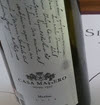
The first Mexican red we tasted. It was the lightest, and perhaps the least pronounced of all the reds, we tried. However, it is easy drinking and its versatility would make it pair well with a variety of foods.


Meaning “broken wing,” the Ala Rota is from the same producer as the Marella. This Cab and Merlot blend is kissed with 15% Tannat, giving this full-bodied wine a beautiful inky color.


This Montepulciano and Barbera blend was outstanding, though it would have shown even better with food. The Peninsula Lyra is a new line of wines produced by L.A. Cetto, the biggest winery in Mexico.


The Gran Reserva Cabernet was a favorite during our visit. It served as a bold contrast to the lighter Merlot we tasted previously.


This is the only wine we self-selected during our trip. We ordered it for dinner at Nebbiolo, the resort’s Italian restaurant. It was an easy-drinking Cab Franc and, in comparison to the herbaceous Cab Francs from other regions, it had more fruit with a lot of plum and black fruit on the nose.

A wine that strongly mirrors an Italian Brunello. Drinkable right out of the bottle, but would also would do well aged. We had this during the tasting, but would have been ideal with Italian food!

We had dinner on the beach one evening and Martin brought us this Tempranillo Cabernet blend. At first, it looked like a bottle from the Prisoner Wine Company. The label was a fist cloaked in black and white shadows. With a nose almost like port, this hearty wine paired well with our steaks.

And, of course last but not least, was my favorite, the Mourvedre. We paired it with a chef’s dinner consisting of empenadas with hummus, a Mediterranean salad sampler, and lamb. A must try when in Mexico!
